NLP Success By Design
Menu

The NEW Structure of Magic: PATTERNS FOR PROBLEM SOLVING

3/1/2023

0 Comments


The NEW Structure of Magic
Patterns for Problem Solving
Revised and updated for the 21st century!

by Dr. Richard Bandler & Owen Fitzpatrick
Video synopsis
Picture
Click image (above) or this LINK to Purchase
0 Comments

NLP for the WORLD

11/18/2020

0 Comments


NLP for the World-Ebook
Tools and Strategies from us to YOU


This complimentary E-book was written with you in mind. Use the knowledge contained as you please. Share what you've also learned, with the world.


"Between stimulus and response, there is a space. In that space is our power to choose our response. In our response lies our growth and our freedom.”
-- Viktor E. Frankl, Man's Search for Meaning
"The significant problems we face today cannot be solved at the same level of thinking we were at when we created them".
-- Albert Einstein
"I think what we're seeking is an experience of being alive. The life experiences we have resonate within so we feel the rapture of being alive!"
​-- Joseph Campbell


Picture
NLP for the World-(English download)
NLP for the World-(Spanish download)
NLP for the World-(Japanese download)
NLP for the World-(Italian) COMING SOON
0 Comments

Richard Bandler cures Michael Strahan of snake phobia

11/15/2018

0 Comments


Michael Strahan cured of snake phobia (aka NLP in action)

"...'Let me tell you the secret. The secret is it's not the snake that scared you; it was the big giant picture jumping out at you'....the images and sounds you generate in your mind create the feelings.

​Change the way you think, you change the way you feel, thus you change what you do...!"
0 Comments

Bandler and the Profane

7/16/2016

0 Comments


Bandler and the Profane

Where do you "choose" to place your mind, energy and intent? We have a choice. Here is a perfect example.
0 Comments

Power is in your Hands

2/3/2015

0 Comments

 
Gestures are often overlooked; yet, they are powerful tools when used properly during communication. NLP founders, Bandler & Grinder, modeled world-renowned family therapist, Virginia Satir. They creatively applied her successful methods in a variety of communication contexts outside the therapeutic sphere. This helped to bring Virginia's work into the mainstream. 

Power is truly in your hands.
0 Comments

I'm Right; You're Right!

8/4/2014

0 Comments


I'm Right; You're Right!
By John G. Johnson

Picture
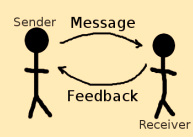
You are correct if you say we communicate using words- partially though! We also employ voice tone, gestures and body language, emotional state, clothing, the physical location (aka time/place setting) we occupy, and more; this is, in addition to the words we use. Even the lack of communicating is a form of communication. In short, we are always transmitting messages. We just cannot– not – communicate!

This non-stop sending of messages, intentionally, or not, does several things: One, it makes is highly likely that mis-communication will occur. Those among us who've lived a life have experienced the aforementioned, whether it’s you that misinterpreted the sender’s transmission, or the other way around. Two, it calls out a response from the receiver, somewhat like a stimulus response loop. For example, I say “good morning” to you and you respond in turn. Or with the intent of initiating a handshake, I extend my hand, and you do the same (providing you are polite).

Skilled negotiators and communicators understand the role their goals and intent play when crafting and delivering precise messages. They’re also keenly aware of the important role the receiver’s subjective experience of reality plays in how the message is received and interpreted.

Take note, because it’s on the level of subjectivity where mis-communication oftentimes occurs, hence the axiom: “The meaning of the communication is the response you get!”

Case in point: (names changed to protect the not-so-innocent) “Host and Wife” were having a private dinner for “Couple M & W”, new-found friends of theirs. In some cultures, it’s customary to take your shoes off upon entering a home. This is the practise Host and Wife observed as children, and still today as adults.

When Couple M & W arrived they had no idea about Host and Wife’s cultural protocol. So in they came, shoes and all. On top of this, Couple M & W graciously brought with them, because it was their customary practice to do so, to demonstrate politeness and grace, a gift, theirs was a cooked meal, which happened to be meat, for Host and Wife. What Couple M & W also didn't know was that Host and Wife were strict vegetarians.

From Host and Wife’s point of view they were being insulted – from the failure of their guests to remove their shoes, and that meat entered their home.

Couple and Wife realizing the ice-cold atmosphere getting even colder by the moment sincerely and whole-heartedly apologized and made the necessary adjustments. They explained that it was not their intent to offend.

Who’s right versus who’s wrong, in an interaction, sparked by a misunderstanding, is irrelevant, Because from their point of view, and from the intent of all parties involved, all are right!

This subjective world is rich and vast. As such you can't be error proof when sending messages; but you can reduce the likelihood. If  a perceived misunderstanding arises, apologize, error correct, explain your intent and find common ground so you and the other person can move forward.

“Treat people the way you want to be treated!” is not only dumb, but a false adage that's gone unchallenged. It's akin to saying "fight fire with fire," when water quenches fire. Like a virus, the former (and latter) has infected various communication models.... “Treat people the way they want to be treated.” Thinking from this view point allows one to behave differently, whether you're the message's sender or receiver. Saying it another way...whether you are the sender or receiver, get to know the other's worldview. You will learn more about each other. And you will literally be discovering how "each other prefers to be served," so to speak!


©2014 John G. Johnson All rights reserved! Subscribe to our mailing list for workshops, newsletters and events. Go to:  www.nlpsuccessbydesign.com


0 Comments

Strategies for Solutions

6/30/2014

0 Comments


Strategies for Solutions
By John G. Johnson

Picture
Ethan Hunt’s mission (Tom Cruise- Mission Impossible 4), that he’s already accepted, is to pacify a diabolical master-mind bent on starting World War III is. To do this, Ethan needs access to the highly-secured server room nestled within the world’s tallest building, the Burj Kahlifa All “safe” options to enter this room are useless. The last available course of action is a ‘take or leave it option’ – entering from the outside… And off he goes, in Ethan Hunt fashion, scaling the building, unaided by a harness – but by futuristic suction-gloves.

A glove malfunctions, leaving Ethan dangling 3,000 feet from death. Oh, did I mention that a skin-stripping sandstorm is just off the horizon, gunning directly towards him? I would say Ethan Hunt has a – “problem”….

Whether in the cinematic world or in this “real” one, when wishful expectations fail to match what actually occurs in reality, that’s when we realize a problem exists. But, truth be told, the problem isn't usually the problem; it’s how we deal with it. This is key.

We all have reflexive responses for dealing with common situations which arise. Some work well, others don’t; the interesting thing is, we continue to employ tactics we know are useless, like ignoring, making excuses, blaming others for a problem, etc. and keep getting the same empty results. It’s like beating one’s head against the wall – stop!

Recognizing that a problem exists also presupposes that a solution is present, though hidden – temporarily. Albert Einstein famously said, “…The significant problems we face today cannot be solved at the same level of thinking we were at when we created them!...” In other words, if we are to unearth solutions for what we perceive to be an existing issue of concern, then a revolutionary perspective, a new way of thinking needs to be exercised.

We can start by first defining what the problem is. This requires several things: One, we take some responsibility for the issue at hand. Simply put, what was your role in making the problem exist? What did or didn’t you do? For example, your consistent cell-phone usage while driving consistently gets you pulled over by a police-officer who routinely gives you a ticket. Blaming or arguing with the officer does not solve the issue. Taking some responsibility for the act offers you a new vantage point from which you can *see solutions for your problem.

Second, focus on solutions. Visualize the outcome; ask solutions-based questions, instead of riveting your attention on the problem, thus feeding it unnecessary energy. Adding to the example above, instead of the driver paying attention to the anger and frustration triggered by receiving the ticket, he/she can focus on safe driving, and ask solution-based questions such as, “How can I eliminate getting tickets and drive safely on the road?” (Can you construct additional creative solutions-based questions?)

Third, we've either said these words, or have heard someone say them, “I need to get some space, some distance from the problem!” A hidden power resides in this statement. However you do it, physically or mentally, putting distance between you and the scenario in question shifts your state of mind and perspective, thus helping you to find creative solutions.

Adopting useful beliefs are also important when searching for creative solutions. Beliefs aren't “wrong or right,” per se; they are just useful, because they act as discriminating doorways, halting incompatible thoughts, ideas, and behaviors from entering one’s mind-space. Neuro-Linguistic Programming (NLP) contains many useful beliefs that can be applied to solutions-based thinking.

Some of the following are:

  • Failure versus Feedback
We've all seen movies where the hero fires a heat-seeking missile at the villain. But the agile villain constantly dodges it, causing the missile to fail in connecting with its target. But the missile, as if it has a mind of its own - self- corrects - and gets back on its aggressive course…and does connect with its target. Failure versus feedback can be likened to this missile. Instead of calling your results, a failure, think of them as - feedback. It’s this information feedback you use to re-calibrate, so that when you get back on course, you’re armed with additional data on how to navigate, the best way to get things done, so you accomplish your goal.

  •  Humans Have the Resources to Affect Change
Most of us have become accustomed to doing things a certain way. This oftentimes can lead us to believe that no other approaches exist to get the same task done, and that problems are bound to occur when this singular tactic can no longer be used. As previously stated, beliefs are neither wrong nor right, but useful.

Finding ourselves in a pinch is no excuse for staying there. Adopting the belief that we have the ability and power to influence our outcome is a good step in the right direction. For example, Ethan Hunt, after having gained access to the server-room, now must urgently get back to his team – asap! However, from the looks of things, he’s in some serious trouble:… Both of his futuristic climbing gloves (the only climbing gear he has) are destroyed, he’s several-thousand feet up, a dreaded sand-storm is minutes away, and he can’t use the elevators. What’s he to do?

If action reveals character, then it’s clear from witnessing Ethan Hunt’s previous exploits that he possesses certain abilities: He has the mental prowess to push aside fears; he can prioritise, focus and he’s always committed to a cause. These qualities are what Ethan accesses and utilizes…Ethan Hunt straps himself to on one end of a fire-hose, throws the other end out the window and races down the side of the building, … escaping, without the use of magical powers, but by taking advantage of resources that are already within him.

Like Ethan, we, too, can utilize the built-in resources unique to each of us, and also what's within our control to discover solutions. Examples of people doing such things, refusing let their circumstances limit or imprison them, are abundant.


©2014 John G. Johnson All rights reserved! Subscribe to our mailing list for workshops, newsletters and events. Go to:  www.nlpsuccessbydesign.com


0 Comments

The Danger of a Single Story

6/30/2014

0 Comments

 
As you are listening to celebrated author Chimananda Ngoze Adiche’s TED Talk, keep the following in mind: –
“The 'Power' of a single Story” and the impact is has on point of view."

The stories we are exposed to, and the ones we tell ourselves, help to frame and shape our self-perception, and how we experience the world we live in.

0 Comments

The Secrets of Champions: Relentless Discipline

6/30/2014

0 Comments


The Secrets of Champions: Relentless Discipline
By Owen Fitzpatrick


Picture
Earlier this year, I had the fortune to work in my capacity as a performance coach with the Stirling Clansmen (the 2014 American Football British National Champions). Although I played a very small part in helping them get in the right frame of mind to play their best, what I learned from observing them taught me some extremely valuable lessons.

The most important lesson that I learned was in observing what I call relentless discipline. The Stirling football coaches cultivated a culture on the team that was extremely impressive. They emphasised over and over again the essential need to be consistent in everything they did. They worked hard on the pitch and were well behaved off it. The importance of a code of behaviour was instilled quite brilliantly.

I’ve never had a more receptive audience than the 40 strong Stirling group. They were hungry for success and cohesively resonating with that hunger. They seemed to have a deep understanding that their conduct would determine how they would perform. Their values all seemed aligned.

To me, that is where relentless discipline comes from. It comes from the ability to communicate the importance of being a certain way in all aspects of your behaviour. For to become a champion, you really must become a champion. These champions became champions before they won the title. They became champions by how they acted. They acted like any great sporting icon. They worked as hard as they could work. They supported each other and they respected their opposition and anyone involved in the game.

I see discipline as the art of getting yourself to consistently behave in a certain way regardless of how you feel. When I go to the gym, I rarely go because I’m excited about it. I go because I know it’s really important for me. I made that decision because I decided I would value it. I made that decision because I decided to become that kind of person.

We often look to our behaviour to define who we are. When this team looked at their own behaviour, they could see real professionalism. They could see champions. This ensured that their discipline became relentless.

The trick is, if we want to succeed in any chosen area of life, we need to value relentless discipline as being exceptionally important. We need to remind ourselves that success isn't easy and the choices about how hard we are going to work and how consistently we will do so is going to determine whether we are successful or not. The beautiful thing is that it is up to us. It is up to what we choose to give value to. And we need to see ourselves as ‘that kind of person’. That’s a secret of champions.


Owen Fitzpatrick is an International Trainer and Practical Psychologist. He is co-author of six books which have been translated into more than a dozen languages. Owen is also co-founder of the Irish Institute of NLP, the largest NLP training company in Ireland. He is also a qualified Psychologist, Psychotherapist and Hypnotherapist. Owen has also featured as the presenter expert on his primetime television show 'Not Enough Hours' on Irish Television.

Note: Check out Owen's newest bestseller, the sequel to "Conversations" called " Memories: Hope is the Question"
You can post your comments about the book on Facebook

0 Comments

Sharp: Strategies for Optimal Thinking and Behavior

10/24/2013

0 Comments


Sharp
Strategies for Optimal Thinking and Behavior
by John G. Johnson

Picture
“Can you recommend some CD’s on hypnosis that I can listen to, because I want to be smarter?” Alan asked me (name changed to protect the so-called innocent). I've never been asked this before, not until now. It’s not for me to pass judgment on any inquiries. No matter how unique they may be. For we want what we want in order to satisfy values, intentions, needs, wants or desires.

You don’t have to look very far to find an infinite amount of hypnosis-based products promising all types of gains. I could have easily recommended several to Alan, and that would have been the end of it, much like the automatic behaviors we engage in, for example, shaking hands. One person first extends their hand. The other person - without thought - reciprocates. Both hands meet, resulting in a handshake.

Alan said something which made me curious. To be specific, it was a word he used- “smart!” What did Alan mean? What was his definition of that particular word?

I had options at this point: I could’ve asked Alan to clarify what he meant by the word, or to clarify what he meant by the statement. Or even to ask how does he know that a hypnosis product will give him what he wants?...

I did none of the above. Instead, I went in search of this word’s history. I discovered it (smart) comes from the Old-English term “smeart” which had several related meanings: sharp, precise, trim, quick wit, active, clever. This utterance got diluted over time, and lost some of its initial meaning. Today everyone uses this word (smart) in their own way.

It turned out what Alan really wanted was to be more precise in his thinking - at certain times - and on specific topics important to him, so that he felt more satisfied, more confident with actions he took afterwards. Put another way, tools for better decision-making were what he wanted.

If we want to be in a position where we are certain we’re making the best decision(s) possible, satisfied with the actions we’ve taken, have options to choose from, and feel good about the choices we’ve made, - the output, then it’s best to gather as much information possible about the subject we are focused on. This is the input phase.  Tools to help you do that are abundant, with the most direct one being – questions! The quality of your answers rests on the quality of your questions.

The Meta Model or Journalistic Questions are great tools to help you to generate quality information-gathering questions. The more information you have, the better the processing strategies your mind will engage in. Think about it. The mind needs something to work on. The great writers, past and present (and future ones), understand that in order to write, to produce a meaningful piece of work, they must – read! Read to write. “Reading” doesn’t imply books only, but reading the world, the environment you live in and are surrounded by. This act of reading for the writer, this immersion, is really the information-gathering phase, or, as advertising executive, Tor Myhren, calls it “inspiration overload,” the step that gets his creative juices moving.

Another key driver for success is our state of mind. For if we are seeking to enhance the quality of our thoughts and behaviors we need to take this into account. There is a specific state for a specific activity! What states of mind do you think: endurance swimmer, Diana Nyad, the fastest man alive, Usain Bolt, Bookkeeper, Antoinette Tuff, world-class public speakers, or even individuals who've changed the world, entertain, so they can perform at an optimal level? This then begs the question: “What states of mind must you activate if you want to produce the right thoughts and actions?”

Other strategies for input are:
  • Having and experiencing multiple points of views on a single subject.
  • Putting yourself in situations that cause you to grow, to learn. In other words, get out of your comfort zone. 
  •  Self-reflection.
  • Exercise: The brain is a glutton for glucose and oxygen. Getting the body moving triggers all kinds of responses within the body and mind. Some of the greatest ideas individuals have had in their lives came to them while exercising. 

©2013 John G. Johnson All rights reserved! Subscribe to our mailing list for workshops, newsletters and events. Go to:  www.nlpsuccessbydesign.com


0 Comments

What Cicero can Teach us about Persuasion and Public Speaking

10/23/2013

0 Comments


What Cicero can Teach us about Persuasion and Public Speaking
                                                                                          by Owen Fitzpatrick

Public speaking is an art form that many would love to master. Whether you need to give a best man’s speech at your brother’s wedding or you must present an idea at the monthly network meeting, public speaking is a skill many people seek. At present, since I’m busy just having launched the upcoming Charisma Bootcamp, I thought I’d share some thoughts on the matter.

Cicero was a politician of ancient Rome who is widely known for his prowess at public speaking and rhetoric. Having studied some of the greatest speakers from Greece at the time, Cicero became a powerful figure largely through his ability to inspire and move his audience. So, what are some of the keys we can learn from Cicero and his skills of oratory?

Cicero explained that there were five elements important to consider when creating a speech and making an argument. They are:

1) Invention
2) Arrangement
3) Style
4) Memory
5) Delivery


Let’s go through each one and explore how we can use this system.

Invention:

This is exactly what it sounds like. The first key is to ask yourself the question what is the goal of your speech? When you create anything, that is a good question to ask. Once you identify what you want, the next step is to list out all the different ideas or concepts that might help you make this happen. It is a good idea to figure out what is the message you want to deliver to the audience.

Arrangement:

This is how you structure your speech. This is broken up into Introduction, Main Body and Conclusion. Your Introduction should introduce your message, establish your credibility and connect with the audience. It should also capture their attention from the outset. You main body should share fact, evidence, stories, examples using both logic and emotion to influence your audience. You should acknowledge any arguments which counteract your one and dismiss them using logic and reason. The conclusion should then drill home your message and leave them with a good feeling connected to it.

Style:

This is how you write or prepare your speech. The words you use must fulfill the following criteria. They must be simply put, clear, vivid, fit with the expectations of and in the same language as the audience and lastly, the words must sound good out loud. When you read out what you have written you will get a good sense of what sounds good and what doesn’t.

Memory:

This reflects how you manage to remember the key concepts. It is a good idea to practice creating hooks that you attach each idea to. This means try to fit your speech into a story or connect the main concepts to a mind map or picture. This allows you to use a device to immediately remind you of what the next part of the speech is. Often powerpoint or keynote can suffice here.

Delivery:

This is how you actually deliver the speech. Your facial expressions, eye contact and use of your voice are key factors in presenting your speech powerfully. When you tell a story of something that made you cringe, cringe when you talk about it. During your speech keep making eye contact with the audience and stay a few seconds on each of them. Use variety in your tone of voice and pace of speech. Make sure that when you make an important point you slow down and emphasize the point.

So, let’s take the example of making a best man speech.

Invention:

  • What are the main goals of the speech?
  • Who do you have to thank?
  • Who do you have to complement?
  • What do you want the audience to know and feel?
  • How do you want to present your relationship with the groom?
  • How do you want the groom to feel?
  • What are the best stories you have of your time spent with the groom?

Arrangement:

  • What joke or funny story can you start with?
  • How do you want to introduce yourself?
  • How can you best connect with the audience? What will they relate to?
  • Where will you do the ‘thank you’ part of the speech?
  • Which stories will you tell? (usually picking 2 or 3 is perfect)
  • What order will you tell the stories in?
  • How will you finish the speech? (sentimental or funny)

Style:

  • Is the vast majority of your speech something that everyone can relate to?
  • What do you need to explain in order for everyone to understand the stories?
  • When you choose the stories to tell, how can you make them more vivid?
  • When you read the speech aloud, does it sound good?
  • How can you make it sound better?

Memory:

  • Use cue cards if you need to with the main keys of the speech written as words to remind you.
  • How can you link the stories together so that each one reminds you of the next?
  • How can you remind yourself of all the different people to thank?

Delivery:

  • How can you tell the stories in the best possible way?
  • What accents can you do or impersonate to really make the stories more vivid?
  • How can you include the crowd on any of the jokes?
  • How can you use variety in your tone of voice to make it more entertaining?


Owen Fitzpatrick is an inspiring, engaging and entertaining speaker  NLP Master Trainer, specialized in Charisma, co-author of 'Conversations with Dr. Richard Bandler' , co- author of ‘Choose Freedom’, an international bestseller. ‘Not Enough Hours’, a bestseller in the Irish Times Bookcharts and ‘NLP for Charisma’. Owen was the presenter and expert of the primetime show ‘Not Enough Hours’. He  is co-founder of the Irish Institute of NLP along with Brian Colbert. Founder of the Online Charisma Training Academy", and author of the soon to published book "The Charismatic Edge," as a trainer Owen is one of the most well respected authorities in the area of NLP:  www.owenfitzpatrick.com
0 Comments

    Categories

    All
    Amygdala
    Beliefs
    Brene Brown
    Business
    Coaching
    Creativity
    Goal Setting
    Havening
    Health & Wellness
    James Pennebaker
    Jim Rohn
    Jordan Peterson
    Martial Arts
    Narrative
    Negotiation
    NLP
    NLP For The World
    Owen Fitzpatrick
    Persuasion
    Phobia
    Public Speaking
    Resources
    Richard Bandler
    Richard St. John
    Sales
    Simon Sinek
    Solutions
    Values
    Wealth
    Writing

    NLPSuccessByDesign

    Discover your Strengths. Transform your-Self.

    Archives

    March 2024
    March 2023
    February 2023
    November 2020
    May 2019
    November 2018
    June 2018
    July 2016
    March 2015
    February 2015
    August 2014
    June 2014
    October 2013
    September 2013
    June 2013
    April 2013
    October 2012
    September 2012
    August 2012
    July 2012
    June 2012
    May 2012

    RSS Feed

Powered by Create your own unique website with customizable templates.
  • Home
  • What is NLP™?
  • Seminars & Events
    • Seminars & Events
    • NLP Coaching Foundations
    • NLP Practitioner Certification Training
    • Building a Better Martial Arts School
    • Expressive Writing
    • One to One Personal Performance Coaching
  • Testimonials / About Us
    • Testimonials
    • About John G. Johnson
  • Inquiries / Contact
  • Subscribe
  • Blog / Resources
    • Blog
    • Resources
  • Home
  • What is NLP™?
  • Seminars & Events
    • Seminars & Events
    • NLP Coaching Foundations
    • NLP Practitioner Certification Training
    • Building a Better Martial Arts School
    • Expressive Writing
    • One to One Personal Performance Coaching
  • Testimonials / About Us
    • Testimonials
    • About John G. Johnson
  • Inquiries / Contact
  • Subscribe
  • Blog / Resources
    • Blog
    • Resources